Adaptive Bridge
A scalable trauma- and neurodiversity-informed provider-training and organizational implementation framework designed to make support more accessible for children, adolescents and families affected by trauma or major life disruption.
Масштабований trauma- та neurodiversity-informed framework для підготовки фахівців і організаційного впровадження, спрямований на доступнішу підтримку дітей, підлітків і сімей після травми або значних життєвих змін.
Access problems can look like motivation problems
Проблеми доступу можуть виглядати як проблеми мотивації
Trauma and major life disruption can affect regulation, attention, communication, sensory and information processing, transitions, family functioning and trust in service systems. Similar outward behavior can arise from very different or overlapping needs.
Травма та значні життєві зміни можуть впливати на regulation, увагу, комунікацію, sensory та information processing, transitions, функціонування сім'ї й довіру до систем допомоги. Однакова зовнішня поведінка може мати різні або взаємопов'язані причини.
Adaptive Bridge does not ask non-specialists to diagnose the cause. It offers a safer response sequence: access and stabilization first, then context, individualization, resources, referral and adaptation.
Adaptive Bridge не вимагає від нефахівців визначати діагноз або причину. Він пропонує безпечнішу послідовність: спочатку access і stabilization, далі context, individualization, resources, referral та adaptation.
Make support usable without erasing individual differences
Зробити підтримку доступною без стирання індивідуальних відмінностей
The framework is designed for organizations and professionals working within their actual role and competence. It supports accessible communication, predictable participation, family resources, clear referral pathways and organization-level implementation.
Framework розрахований на організації та фахівців, які працюють у межах своєї реальної ролі й компетенції. Він підтримує accessible communication, predictable participation, family resources, чіткі referral pathways та organization-level implementation.
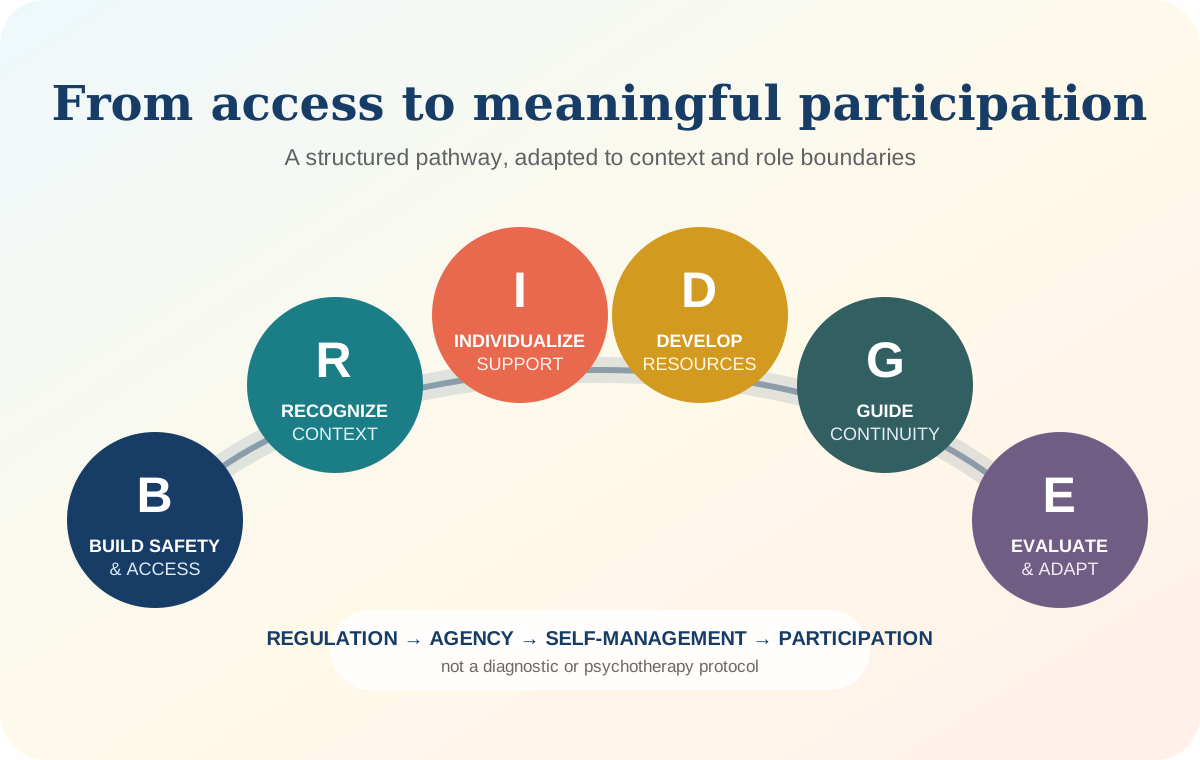
Six steps, one consistent logic
Шість кроків, одна послідовна логіка
The six-step core is already defined. Supporting instructions, tools, examples and implementation materials are being refined around this architecture.
Шестикрокове ядро вже визначене. Інструкції, tools, приклади та implementation materials зараз деталізуються навколо цієї архітектури.
Build Safety and Access
Physical, psychological, linguistic, sensory, technological and practical access, with roles and limits made clear.
Фізичний, психологічний, мовний, sensory, technological та practical access із чіткими ролями й межами.
Recognize Context
Consider trauma, development, family context, culture, language, sensory and communication needs without premature pathologizing.
Враховувати trauma, development, family context, culture, language, sensory та communication needs без передчасної патологізації.
Individualize Support
Adjust format, pace, complexity, visual supports, choices, breaks, predictability and ways of participating.
Адаптувати format, pace, complexity, visual supports, choices, breaks, predictability та ways of participating.
Develop Resources
Build accessible regulation, stabilization and family-support resources that can be used in everyday settings.
Розвивати доступні regulation, stabilization та family-support resources для реального повсякденного використання.
Guide Continuity
Clarify when referral is needed and support warm handoffs, understandable next steps, coordination and continuity.
Визначати, коли потрібен referral, і підтримувати warm handoffs, зрозумілі next steps, coordination та continuity.
Evaluate and Adapt
Collect feedback, review accessibility and implementation quality, document barriers and revise without unsupported outcome claims.
Збирати feedback, оцінювати accessibility та implementation quality, документувати barriers і переглядати матеріали без unsupported outcome claims.
A framework plus practical implementation products
Framework плюс практичні implementation products
Provider-Training Curriculum
A four-module curriculum covering trauma and adaptation, access and communication, stabilization and family resources, role boundaries, referral and organizational implementation.
Чотиримодульна програма про trauma та adaptation, access і communication, stabilization та family resources, role boundaries, referral та organizational implementation.
Youth & Family Resource
A bounded psychoeducational resource focused on predictability, understanding stress, regulation, family communication and next-step planning. It is not a psychotherapy protocol.
Обмежений psychoeducational resource про predictability, розуміння stress, regulation, family communication та планування next steps. Це не psychotherapy protocol.
Organizational Implementation Toolkit
Readiness, accessibility, participation, communication, sensory-environment, role-and-scope, safeguarding, referral and feedback tools.
Tools для readiness, accessibility, participation, communication, sensory environment, role-and-scope, safeguarding, referral та feedback.
Rebuild & Participation
A track supporting movement from stabilization toward daily life, learning, relationships, roles and realistic participation.
Напрям, що підтримує перехід від stabilization до daily life, learning, relationships, roles та realistic participation.
Accessible Visual & Narrative Resources
Visual narratives, comics, cards, structured prompts and multimodal explanations, with authorship, consent, age, culture and confidentiality controls.
Visual narratives, comics, cards, structured prompts та multimodal explanations з контролем authorship, consent, age, culture та confidentiality.
Evaluation, Refinement & Dissemination
Structured review, provider-usability testing, bounded organizational pilots, revision, professional dissemination and later train-the-trainer only after readiness evidence.
Structured review, provider-usability testing, bounded organizational pilots, revision, professional dissemination та пізніший train-the-trainer лише після evidence of readiness.
Formalize, review, test, pilot, revise
Формалізувати, перевірити, протестувати, пілотувати, переглянути
Freeze architecture, align terminology, scope, safeguards and representative tools.
Зафіксувати architecture, terminology, scope, safeguards та representative tools.
Professional, cultural, language, accessibility, safeguarding and implementation feedback.
Professional, cultural, language, accessibility, safeguarding та implementation feedback.
Test clarity, practicality, time requirements, role boundaries and referral readiness.
Перевірити clarity, practicality, time requirements, role boundaries та referral readiness.
Pilot only with a defined setting, written roles, consent/privacy, safeguards, referral pathways and evaluation questions.
Pilot лише з defined setting, written roles, consent/privacy, safeguards, referral pathways та evaluation questions.
This is not presented as a validated treatment
Це не подається як валідоване лікування
Current status: practice-informed framework in structured development. Initial evaluation is focused on feasibility, accessibility, usability, role clarity and implementation quality. Clinical efficacy is not claimed.
Поточний статус: practice-informed framework у структурованій розробці. Початкове оцінювання фокусується на feasibility, accessibility, usability, role clarity та implementation quality. Clinical efficacy не заявляється.
Existing professional relationships are not described as Adaptive Bridge partnerships unless there is an actual documented agreement.
Наявні професійні контакти не називаються partnerships Adaptive Bridge без реальної документованої домовленості.
From stabilization toward a life that can be lived again
Від стабілізації до життя, яке знову можна будувати
Rebuild & Participation is an in-development Adaptive Bridge component supporting realistic return to routines, learning, relationships, community roles, self-advocacy and meaningful participation after major disruption. It is not a vocational placement program and does not promise restoration of a previous level of functioning.
Rebuild & Participation - компонент Adaptive Bridge у розробці, що підтримує реалістичне повернення до routines, learning, relationships, community roles, self-advocacy та meaningful participation після значних змін. Це не vocational placement program і не обіцянка повернення до попереднього рівня functioning.
These are potential use contexts for an in-development toolset, not claims that Adaptive Bridge has already been implemented with each population.
Це потенційні contexts для toolset у розробці, а не твердження, що Adaptive Bridge вже впроваджено з кожною з цих груп.
Work that informs or intersects with the framework
Робота, що інформує або перетинається з framework
These projects are not automatically Adaptive Bridge programs. They represent professional trajectories and applied contexts that inform related questions of adaptation, access, regulation and participation.
Ці проєкти не є автоматично програмами Adaptive Bridge. Вони представляють професійні напрями та applied contexts, що інформують пов'язані питання adaptation, access, regulation та participation.
Review, implementation or research interest
Review, implementation або research interest
For professional review, organizational-fit discussion, implementation questions or future research collaboration, contact Fialkora Myndru directly.
Для professional review, обговорення organizational fit, implementation questions або майбутньої research collaboration можна написати напряму.
Access and stabilization first. Context before interpretation. Participation without erasing difference.
Adaptive Bridge working principles