Chronic Illness, Adaptation & RehabilitationХронічні стани, адаптація та реабілітація
Long-term professional work on psychological adaptation after diagnosis, identity, uncertainty, coping, resources, changing roles and meaningful life participation, with a major focus on multiple sclerosis.
Довготривалий професійний напрям про psychological adaptation після diagnosis, identity, uncertainty, coping, resources, зміну ролей та meaningful life participation, із важливим фокусом на multiple sclerosis.
Adaptation is more than coping
Адаптація ширша за coping
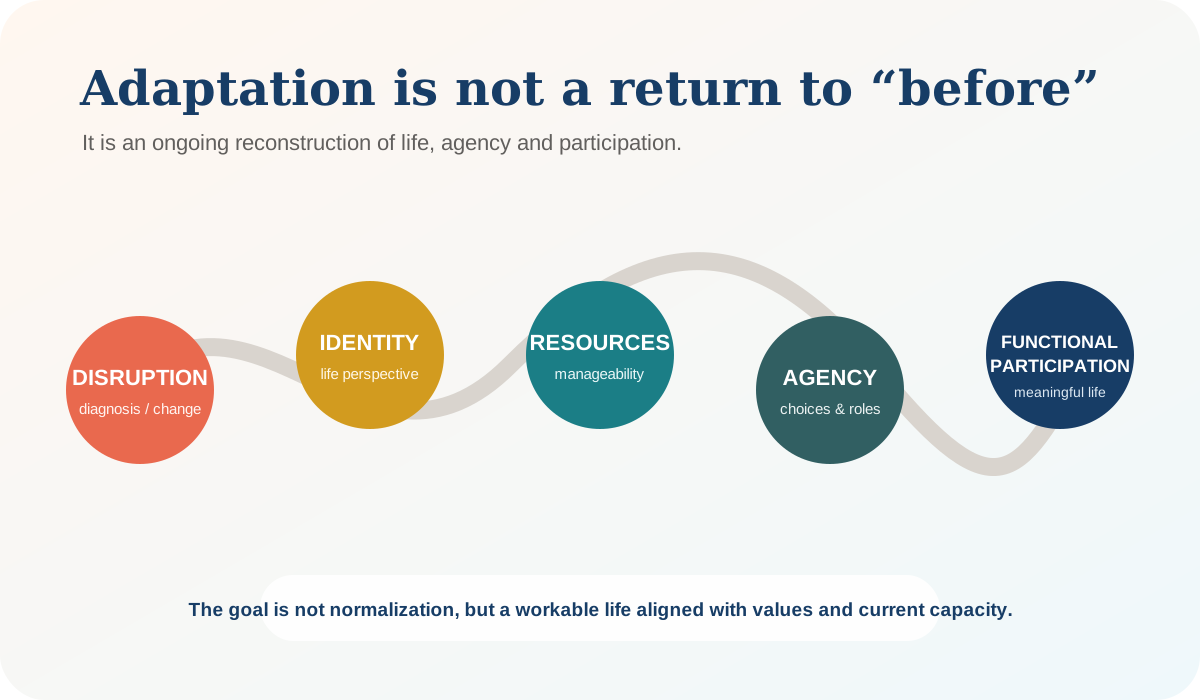
Chronic illness can alter daily rhythm, professional and family roles, identity, the sense of manageability and the way a person imagines the future. Psychological adaptation is therefore treated as a rehabilitation task, not only as a set of coping techniques.
Хронічне захворювання може змінювати daily rhythm, professional і family roles, identity, відчуття manageability та уявлення про майбутнє. Psychological adaptation тому розглядається як rehabilitation task, а не лише набір coping techniques.
The goal is not necessarily to return to the state before illness. A more realistic rehabilitation direction is to rebuild a workable life while preserving agency, values and participation.
Мета не обов'язково у поверненні до стану до illness. Реалістичніший rehabilitation direction - перебудувати workable life, зберігаючи agency, values та participation.
What psychological rehabilitation has to hold together
Що має поєднувати психологічна реабілітація
Identity
Integrating a life-changing diagnosis without reducing the whole self to the diagnosis.
Інтегрувати life-changing diagnosis, не зводячи всю identity до діагнозу.
Uncertainty
Learning to act with a partly open future rather than waiting for complete predictability.
Вчитися діяти з partly open future, не очікуючи повної predictability.
Resources & manageability
Clarifying what can be influenced, where support is available and how load can be adjusted.
Розуміти, на що можна впливати, де є support і як адаптувати load.
Functional participation
Staying connected to meaningful roles, relationships, self-management, work or study and future planning.
Зберігати участь у meaningful roles, relationships, self-management, work або study та future planning.
Research, education and writing around MS and chronic illness
Research, education та writing навколо MS і chronic illness
This branch brings together long-standing work in coping and rehabilitation psychology, public and professional education, and newer writing that extends the focus from coping toward reconstruction of life perspective and functional participation.
Ця гілка об'єднує довготривалу роботу з coping та rehabilitation psychology, public і professional education та новіші тексти, що розширюють фокус від coping до reconstruction of life perspective і functional participation.
Long-term work on adaptation to diagnosis, uncertainty, coping, identity, fatigue and fluctuating functioning, relationships and meaningful participation.
Тривала робота з adaptation to diagnosis, uncertainty, coping, identity, fatigue та fluctuating functioning, relationships і meaningful participation.
Academic work at Ivan Franko National University of Lviv examined coping strategies, psychological resources, well-being and socio-psychological adaptation in people living with MS.
Академічна робота у Львівському національному університеті імені Івана Франка досліджувала coping strategies, psychological resources, well-being та socio-psychological adaptation у людей з РС.
The academic line expanded from coping strategies toward stress resilience, social relationships, psychological well-being and adaptation.
Академічна лінія розширилась від coping strategies до stress resilience, social relationships, psychological well-being та adaptation.
Training work in a clinical setting, alongside regular online educational broadcasts and public psychoeducation about living with MS, stress, adaptation and self-support.
Тренінгова робота у клінічному середовищі, а також регулярні онлайн-ефіри й public psychoeducation про життя з РС, stress, adaptation та self-support.
Invited professional contribution on multiple sclerosis, psychological adaptation, stress and self-regulation.
Запрошений професійний виступ про multiple sclerosis, psychological adaptation, stress та self-regulation.
A conference poster revisiting and extending the academic research line into current rehabilitation psychology language.
Conference poster, що повертається до академічної research line і розширює її сучасною мовою rehabilitation psychology.
English-language book on living after diagnosis, adaptation, identity, resilience and rebuilding a workable relationship with everyday life.
Англомовна книга про життя після diagnosis, adaptation, identity, resilience та перебудову workable relationship із повсякденним життям.
Current scholarly work extends the focus beyond coping toward meaning-making, life perspective, agency, environmental fit and functional participation.
Поточна scholarly work розширює фокус від coping до meaning-making, life perspective, agency, environmental fit та functional participation.
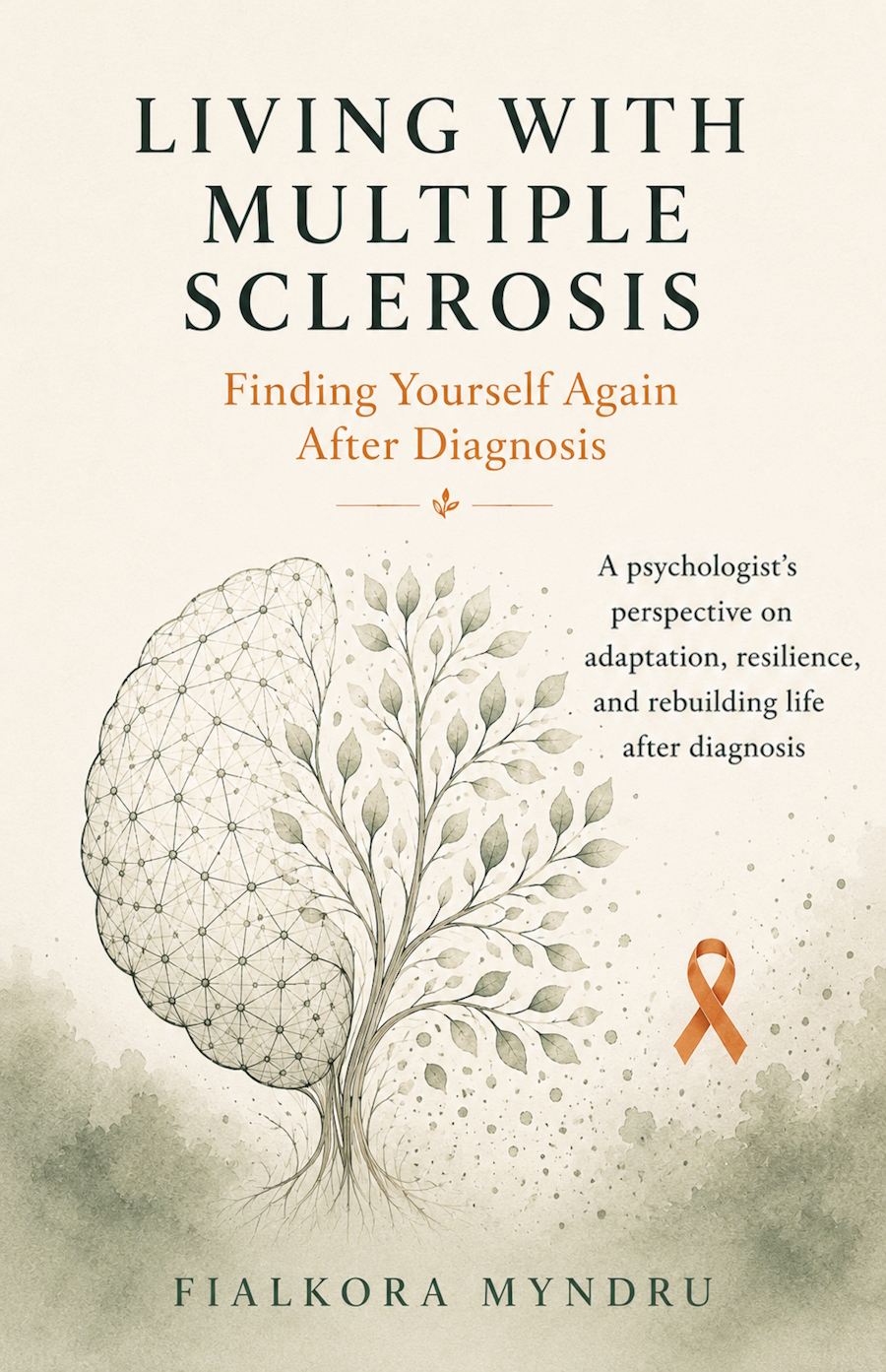
Living With Multiple Sclerosis:
Finding Yourself Again After Diagnosis
A practical and reflective book about adaptation after diagnosis, living with uncertainty, identity, support, self-understanding and rebuilding a life that remains yours.
Практична й reflective книга про adaptation після diagnosis, життя з uncertainty, identity, support, self-understanding та перебудову життя, яке залишається вашим.
A life can be reorganized without being reduced to illness
Життя може перебудовуватися, не зводячись до illness
Psychological support can look beyond anxiety or distress and ask what changed in daily organization, which roles became harder to access, which goals need revision, what resources can be strengthened, and how the environment can better fit current capacity.
Psychological support може дивитися ширше за anxiety або distress і запитувати, що змінилося у daily organization, які roles стали менш доступними, які goals потребують revision, які resources можна посилити і як environment може краще відповідати current capacity.
Functional participation is not identical to returning to a previous level of productivity. It means preserving real involvement in what matters under current conditions.
Functional participation не тотожна поверненню до попереднього level of productivity. Це збереження реальної участі в тому, що має значення за поточних умов.
Adaptation is not a one-time acceptance. It is the capacity to keep rebuilding ways of living as conditions change.
Chronic illness adaptation perspectiveRehabilitation psychology, MS and chronic illness
Rehabilitation psychology, MS та chronic illness
For professional education, writing, research discussion or collaboration related to psychological adaptation and rehabilitation in chronic illness, contact Fialkora Myndru.
Для professional education, writing, research discussion або collaboration щодо psychological adaptation та rehabilitation при chronic illness можна написати напряму.
Adaptive Bridge
Chronic illness and rehabilitation work is part of the longer professional trajectory informing questions of adaptation, access, agency and participation. It is not presented as an Adaptive Bridge program unless specifically developed as one.
Chronic illness та rehabilitation work є частиною довшої professional trajectory, що інформує питання adaptation, access, agency та participation. Вона не подається як Adaptive Bridge program без окремої розробки.
Adaptive Bridge →